
The 4000-Tonne Threat Of Chinese Cranes
Jan 09, 2026
Chinese cranes are entering the lifting market whether you like it or not. They’re cheaper, they’re bigger, and they’re no longer easy to dismiss.
(Watch the live presentation of this article from the CICA Cranes In Wind Forum 2026 Here)
That reality is uncomfortable for an industry that has spent decades anchored to a small number of manufacturers delivering consistent quality and reliable after-sales support.
In this article, we leap to the top end of the scale, comparing the three Chinese 4000t All-Terrains from a capability perspective, comparative to traditional lattice boom options, and the results are utterly surprising.
When I raised this topic on LinkedIn recently, the responses were predictable.
“China will never make a crane like Germany. The build quality just isn’t there.”
“I’m worried about how much testing and due diligence really happens before these machines turn up on site.”
And, on the capability front,
“A big crawler like an LR 11000 would destroy an all-terrain on a wind farm.”
None of those views surprised me. I also consider the first two largely irrelevant to my role.
The only question that matters
I spent ten years as a lift engineer. I don’t buy cranes, I don’t maintain them, and I don’t operate them. In this role, if a crane exists in the fleet, my job is straightforward. If the boss tells me, “We’ve now got a 4,000-tonne all-terrain,” I have one task: determine whether it can perform the lift, document how it will be executed, and confirm that it's the best machine for the job. That’s it.
Now of course, it is absolutely negligent of me to skim over the safety and quality concerns that are synonymous with Chinese cranes. But frankly, I believe these machines are going to get there, and that debate would need a whole article in itself (with a very long comments sections...).
For the purpose of this discussion, I’m assuming a few things are already true. The machine has been designed, tested, and verified to EN 13000, and from a legal, safety, and operational standpoint it is considered usable in Australia. That may sound optimistic, but I think it’s inevitable. At some point, someone reading this will be compiling a lift study for a large Chinese-built all-terrain in Australia.
Pretending otherwise, you are burying your head in the sand.
Seeing is believing
In November 2025, I visited Zoomlion’s factory in Changsha, China with Nationwide Machinery Group, their Australian dealer. Based in Brisbane, the team at NMG are far from naive about the scepticism surrounding their product. But they have a longstanding relationship with Zoomlion and have significantly contributed to the leaps and bounds made by the manufacturer of the past decade.
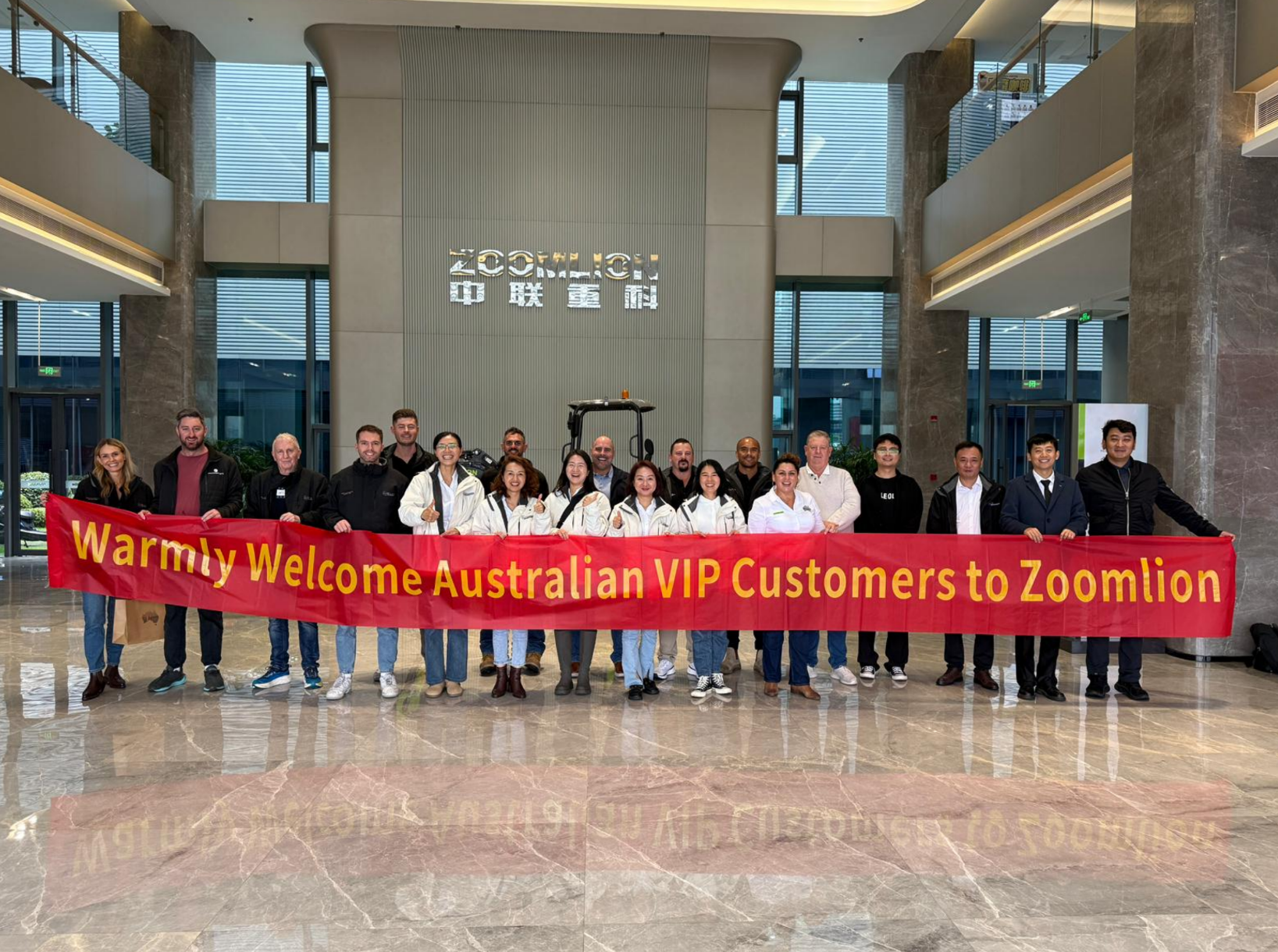
At NMG, their view is simple: people don’t trust what they haven’t seen. And that's why they facilitate these trips for perspective owners to see inside the inner sanctum and make their own decision. For me, the factory itself was utterly impressive. It wasn’t messy, it wasn’t outdated, and it didn’t feel rushed. It looked like a modern, highly automated production facility with serious engineering effort behind it.
Meeting with the head designers left me with an understanding of their desire to truly create the best product for the market. Their lift planning software was particularly impressive.
It was here where I saw the 4,000-tonne all-terrain crane in person.
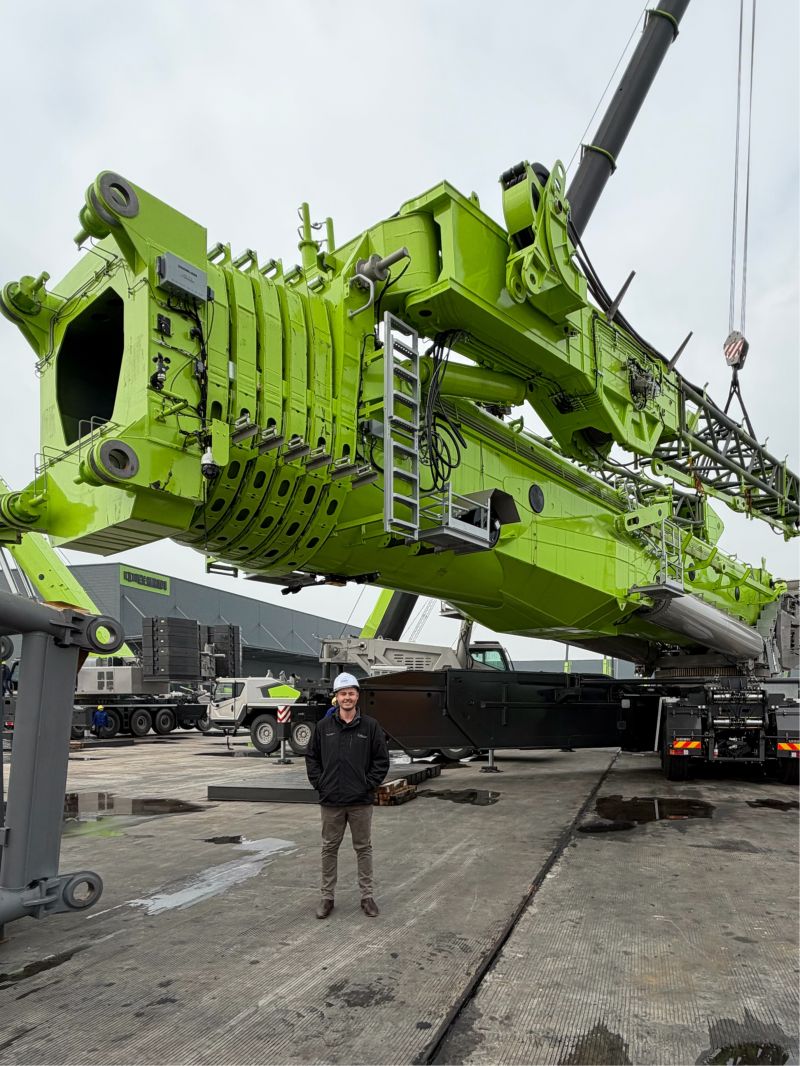
The Zoomlion ZAT40000H763 is a 10-axle all-terrain crane with 96.3 metres of telescopic boom - the longest in its class. It’s enormous. Flat in the cradle, the boom sits around six metres off the ground; comparable German machines sit closer to 4.4 metres. Everything about this crane is big. The 16m x 16m outrigger spread is imposing as you walk around the machine.
But the Zoomlion isn't a one-off. There are currently three variants of 4,000-tonne all-terrain cranes operating in China: the Zoomlion ZAT40000H763, the Sany SAC40000T, and the XCMG XCA40000. I’ve only viewed the Zoomlion machine personally, but all three OEMs were contacted and provided opportunity to review data for comparison.
Comparing them to the right machines
At this size, comparing all-terrain to all-terrain is pointless. The meaningful comparison is with large lattice-boom cranes, because that’s where these machines begin to overlap operationally. For this analysis, I compared them against the Liebherr LG 1750 SX3 and LG 1800 X3, the Liebherr LR 11000 and LR 11350, the Tadano Demag CC.68.1250, and the Sany SCL 10000.
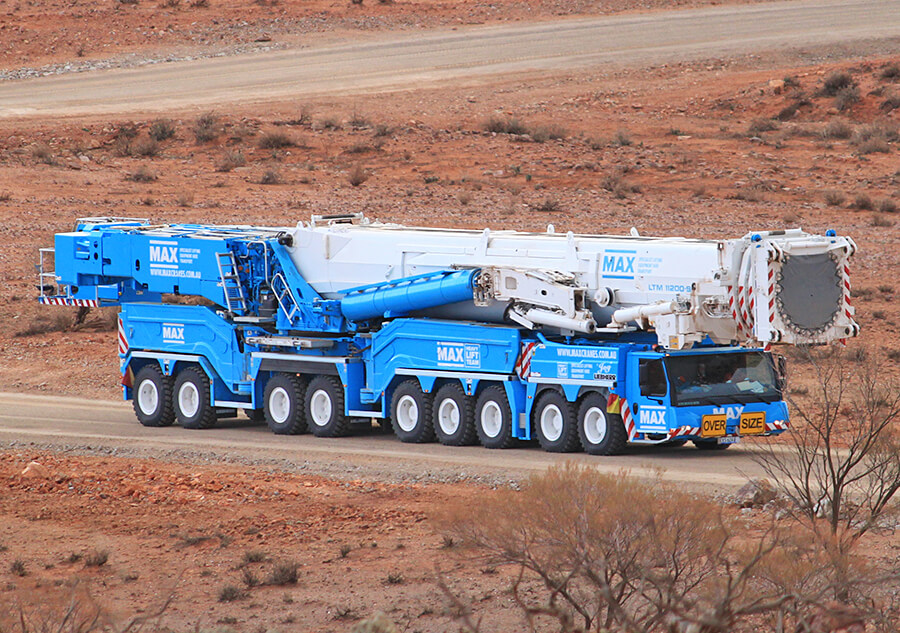
German all-terrains such as the Liebherr LTM 11200-9.1 top out at 1,200 tonnes, so they don’t belong in this comparison. I did however include the Zoomlion 2,400-tonne all-terrain to illustrate that 4,000 tonnes is already beyond what most current projects require and that the 2400t machine is a worthy consideration.
Tech Specs
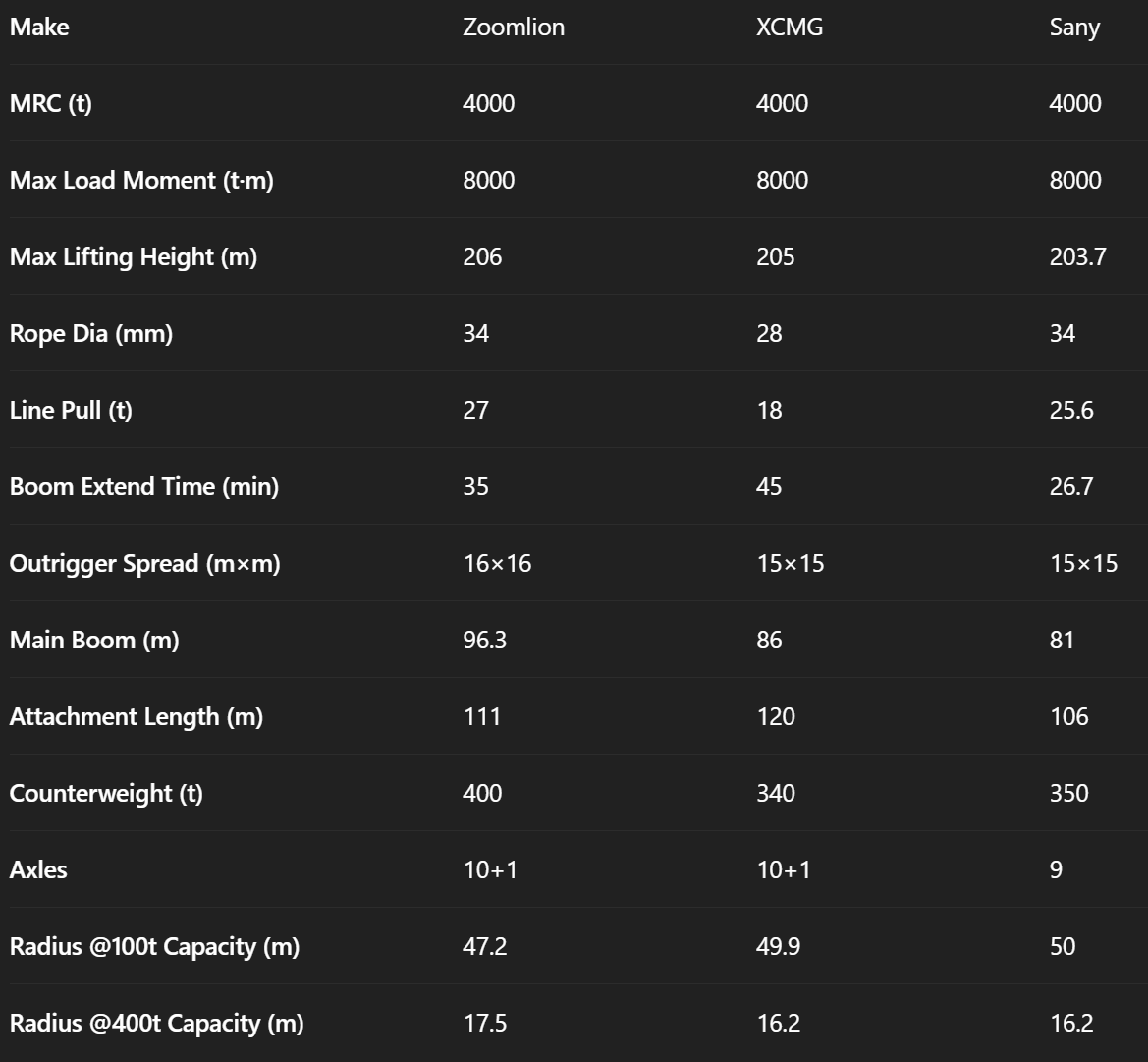
The basic specifications show between 340t - 400t of superstructure counterweight on each variant. The Zoomlion runs the longest telescopic boom at 96.3m followed by the XCMG at 86m and Sany at 81m, but with lattice boom attachments, the Sany still reaches 203.7m hook height, just 2.3m below that of the Zoomlion.
The bottom two rows of data provide information more relative to infrastructure work, considering the versatility of the machines. Throwing 100t to 50m radius without a superlift tray on a pure telescopic boom is nothing to sneeze at.
What the data shows

At around 125 metres hook height — the lower end of today’s wind turbine installations — the only machines in the same ballpark as the 4,000-tonne all-terrains are the LR 11350, the LR 11000, and the CC.68.1250. That’s expected. These machines are designed for heavy lifts at lower heights and larger radii.
Once you move beyond 150 metres hook height, the picture changes. The Chinese all-terrains outperform everything else in the comparison. That surprised me. These are telescopic boom machines, fitted with lattice attachments, some guying, and no superlift trays, competing directly with large crawlers purpose-built for heavy lifting.
Between the three Chinese machines, performance differences are relatively small. Zoomlion generally edges ahead, but the variation is typically within 10%. The Sany is weaker at lower hook heights, which the manufacturer has acknowledged is still under development.
Context that matters
It must be said, that most of the German machines in this comparison were never designed for the scenarios that the 4000t machines excel in. Large crawlers excel below 100 metres, lifting heavier loads at larger radii, that’s their world.
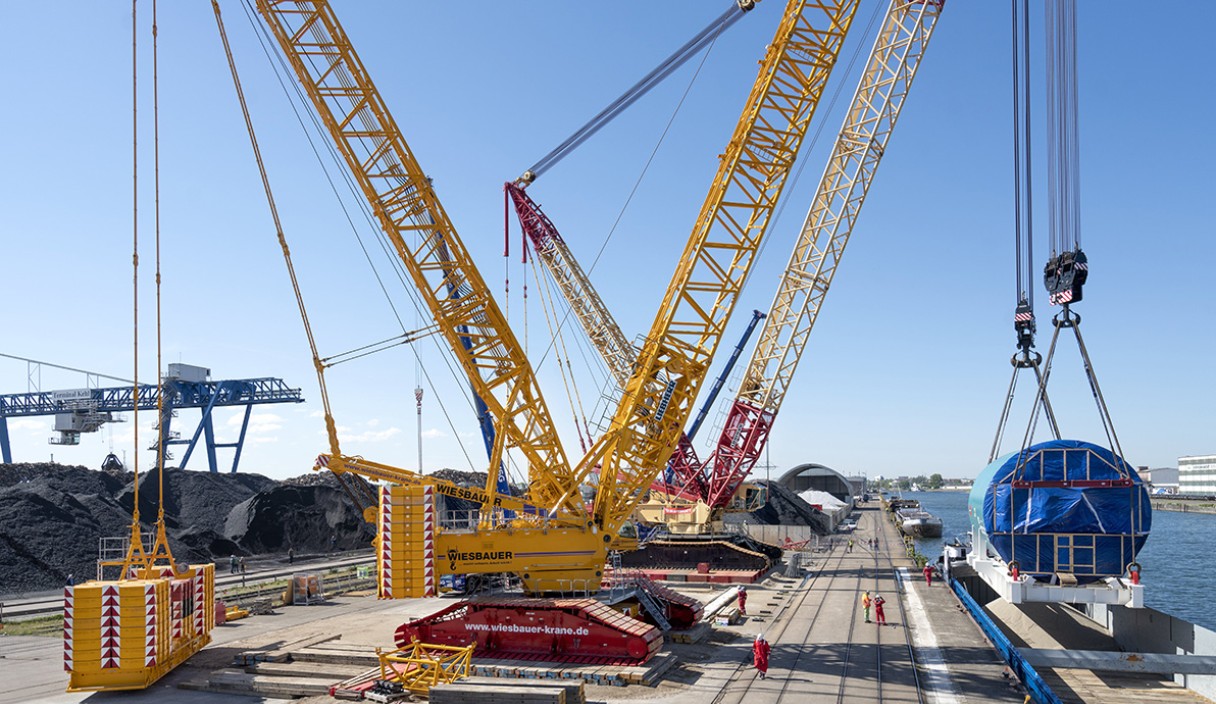
The LG 1750 and LG 1800, by contrast, are designed for today’s wind market. They’re proven, reliable, and efficient when it comes to relocation. They solve the problem the industry currently has.
There is no widespread demand beyond the LG 1800 X3. The Chinese threat is real, but Liebherr aren’t naive. They build machines the market needs, and they do it well. So why have they stopped at 1200t all-terrains? Actually, why are they now only making up to 800t all-terrains? Read below for my thoughts.
Wind speed limitations
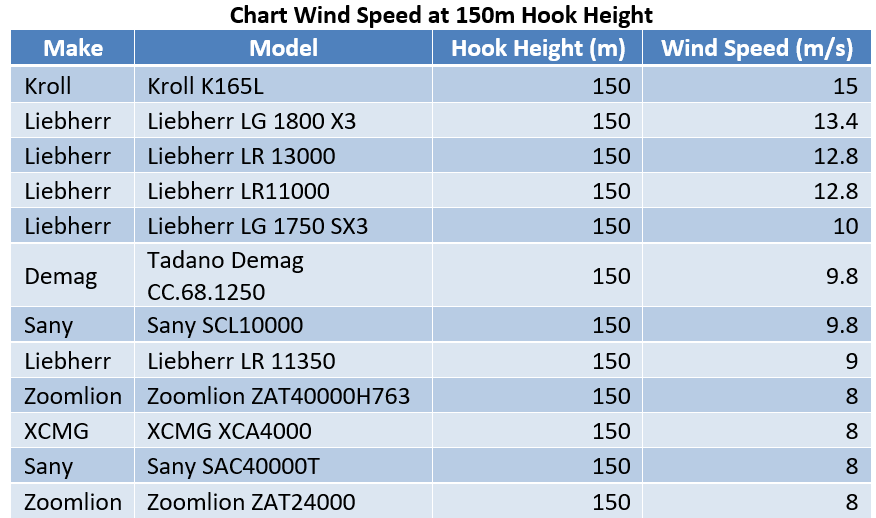
All manufacturers confirmed their charts comply with EN 13000 using a 1.2 m²/t sail-area ratio. At taller hook heights, the Chinese all-terrains are limited to 8.0 m/s chart wind speed. For comparison, the LG 1800 X3 charts up to around 13.4 m/s, the LG 1750 SX3 around 10.0 m/s, and the CC.68.1250 around 9.8 m/s.
Chart wind speed is only the starting point. Once sail area and mass are applied, allowable wind speed is often further de-rated, particularly for full-rotor lifts. Starting from 8.0 m/s will have operators and install crews pulling their hair out.
Relocations: where projects are won or lost
I’ve been directly and indirectly involved in the installation of hundreds of turbines. Once lifting capability is proven, OEMs focus on two things: relocation time between turbines within axle load limits, and boom laydown, boom support and assist crane pad constraints. These are the factors driving cost on projects right now.
For an LG 1750 SX3 working at 150 metres hook height, relocation from final blade install to hook-ready at the next turbine can be around 40 hours at 20 tonnes per axle, plus another seven to eight hours if reduced to 12 tonnes per axle. At that height, you also need roughly 170 metres of boom laydown corridor once gradients, supports, and assist crane pads are accounted for. That’s where civil costs escalate quickly.
The appeal of the 4,000-tonne all-terrains is the potential to reduce both relocation time and boom laydown requirements. That benefit, however, is not guaranteed.
Axle loads and boom laydown realities
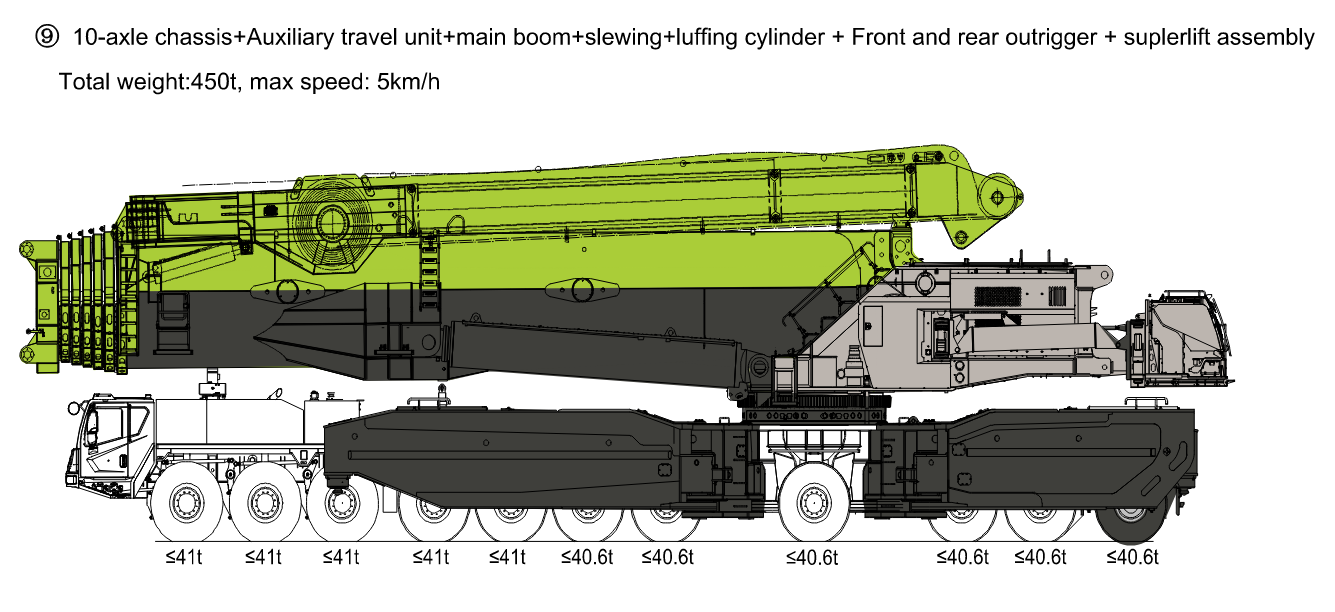
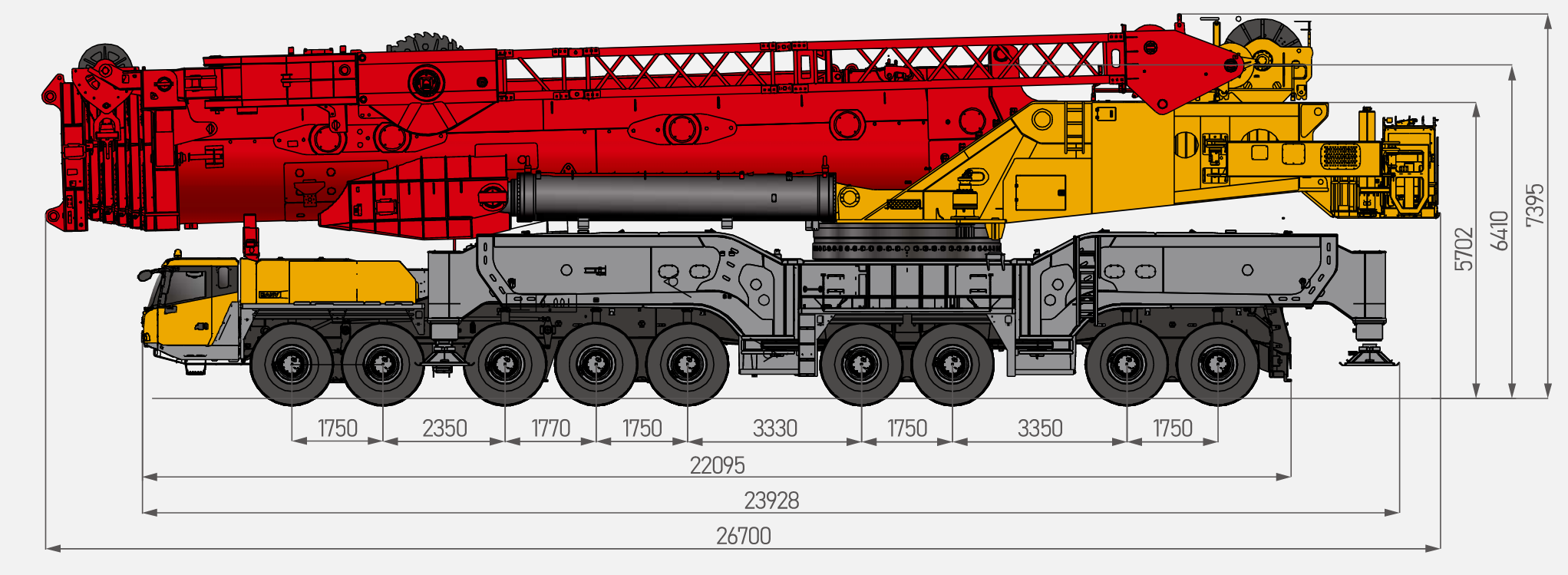
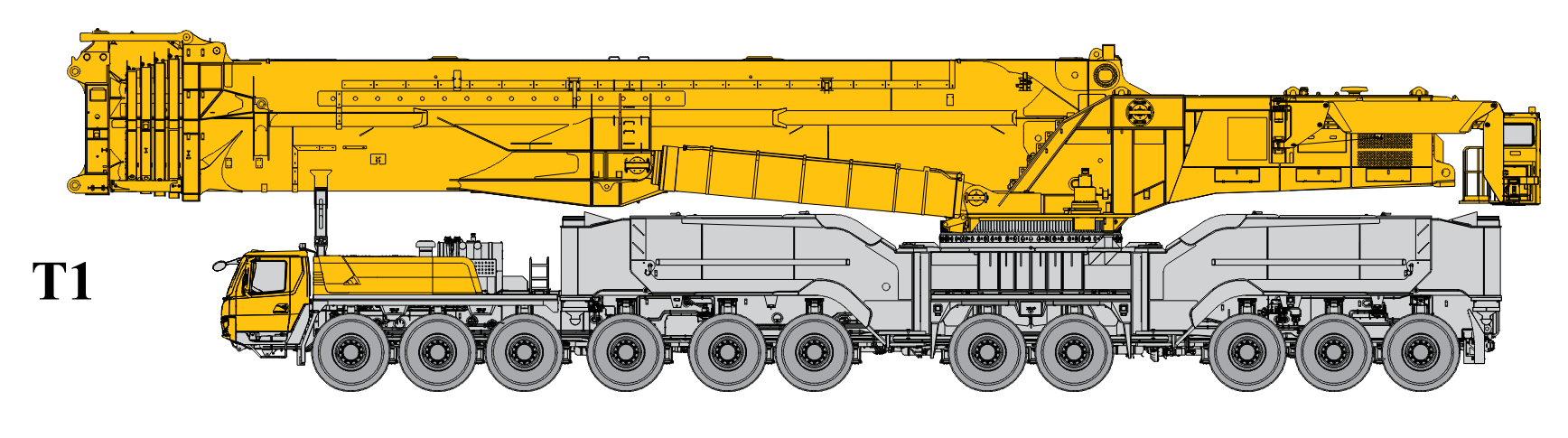
Clear, comparable axle-load data is difficult to obtain at this stage. Each OEM offers multiple configurations, and axle loads vary significantly depending on setup. What is clear is that the axle loads are high. Broadly, we’re talking up to 40 tonnes per axle when travelling with the boom on and outriggers in. The last time I saw 40 tonnes per axle, the chassis resembled a banana. It made for a very nervous engineer watching on.
Despite having telescopic booms, these machines still require up to 120 metres of lattice attachment on the head. That means space is still required for laydown, assembly, and assist cranes. The upside is that these lattice sections are lighter than traditional lattice boom components, which may reduce assist crane size and pad requirements. But the constraint doesn’t disappear.
Final Thoughts - Where the market is heading
Turbines are getting taller, components are getting larger, and margins are tightening. We may not need these machines right now, but this isn’t a question of if demand changes — it’s about who is ready when it does.
Do the European OEM's already have bigger machines waiting in the wings? Or will the Chinese manufacturers keep improving, keep proving themselves, and slowly force their way into the global market?
One thing is for certain - there is a battle to be won, but there is time available to win it. When demand for these machines rises, who will be the clear winner? We can only wait and see.
Follow the Crane Class Newsletter
Become part of the Crane Class Community and receive technical crane knowledge direct to your inbox.
Author