
Safety Leaders, Let's Talk About Frannas
Jan 26, 2026
There is a conversation that must be had inside tier-one organisations whom many years ago imposed a blanket ban on Franna's.
The time for this conversation is now.
This article is designed to help safety leaders navigate this conversation and understand how Franna's actually work. We will discuss the controls that were non-existent in the previous era, the workarounds that have happened on your sites and the systems now available in Franna's that have decreased their risk profile dramatically.
I'm not here to convince you one way or another, but rather provide you the definitive facts about Australia's most popular crane.
Why were they banned?
The reason Franna's were banned, is rational, and I'm not here to debate that.
When a machine becomes a common thread in serious incidents, including fatalities, senior safety leaders don’t get the luxury of nuance. They're expected to act. Quickly. Decisively. In a way that protects people and stands up to scrutiny from regulators, clients, and boards.
For some principal contractors, a blanket ban on Franna's was the only defensible option following fatal incidents on their sites. That doesn’t mean it was wrong.
But it does mean it deserves to be revisited.
Because the work didn’t disappear. The lifts didn’t stop. The risk wasn’t actually eliminated.
It just moved. And actually increased.
The lift still happens.
It always does.
But now it happens with machines lacking the engineering controls that modern day Franna’s now have.
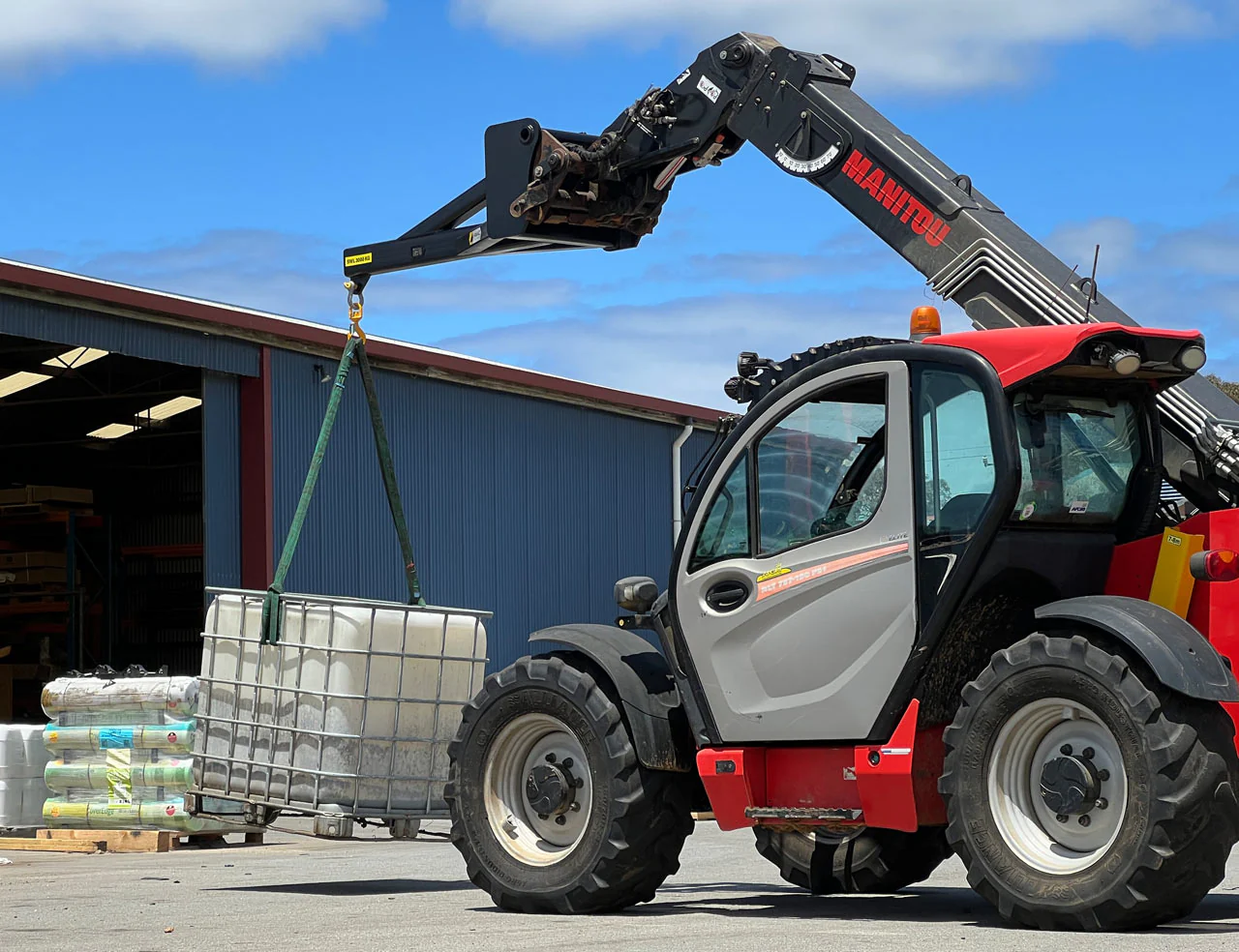
Across many sites, Frannas were replaced with telehandlers, excavators and wheel loaders – otherwise known as Powered Mobile Plant. Machines that were never designed to lift as their primary purpose, are now doing lifting work because the right tool isn’t allowed through the gate.
As noted by Safe Work Australia, “These types of powered mobile plant do not generally provide the same level of safety found in common types of cranes for precision lifting and placement.”
This is because Powered Mobile Plant typically does not come equipped with one of the main mechanisms of a crane – a winch / hoist. That means that raising and lowering of a load is done through hydraulic movements, which no matter how skilled an operator, will never provide the same level of control and accuracy as a winch mechanism.
Moreover, they are being operated by someone whose primary experience is not as a crane operator handling freely suspend loads, requiring precision placement.
In plenty of cases, that workaround has increased exposure rather than reduced it. And that is where a blind eye is getting turned.
Why Frannas are different
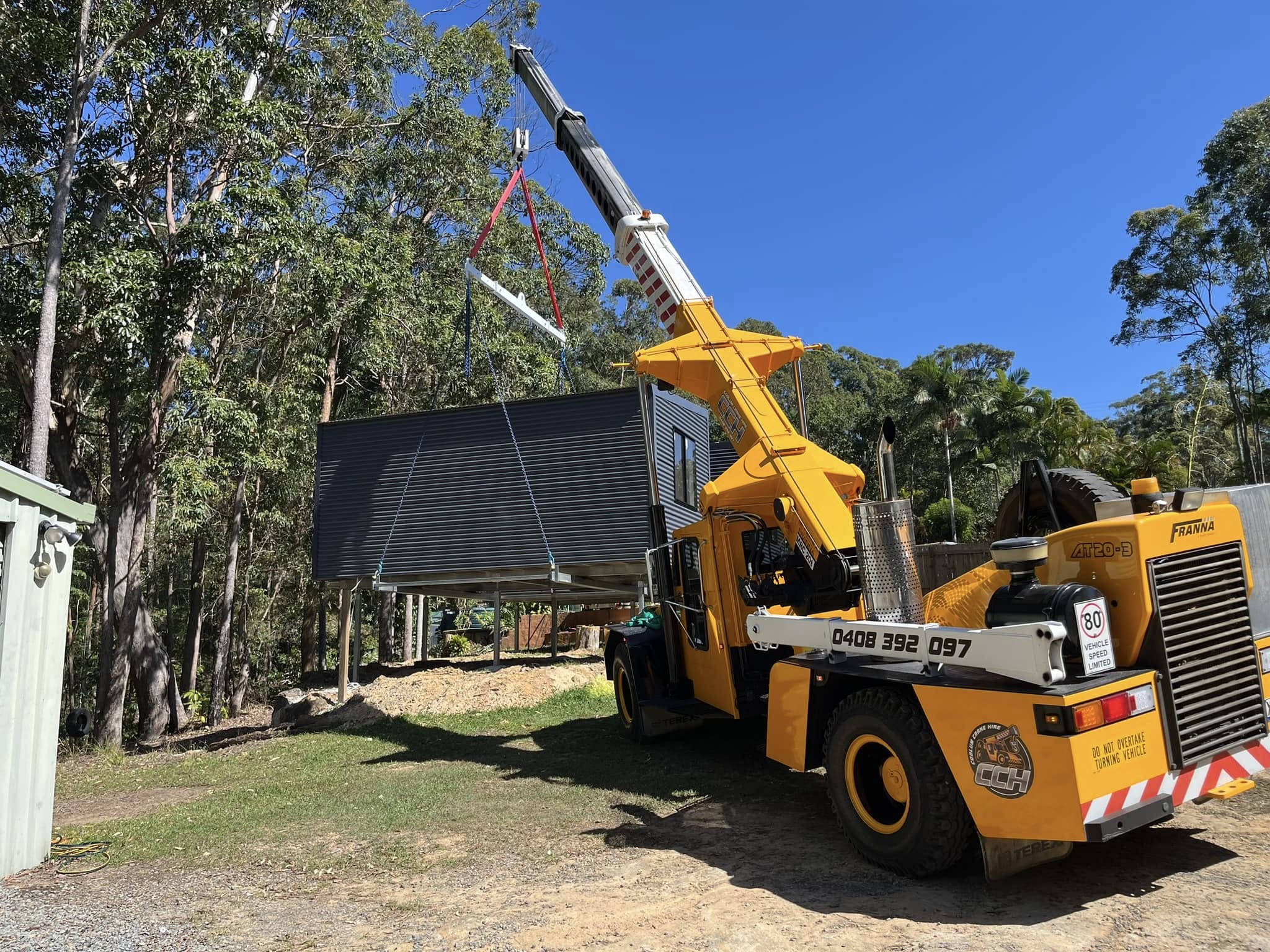
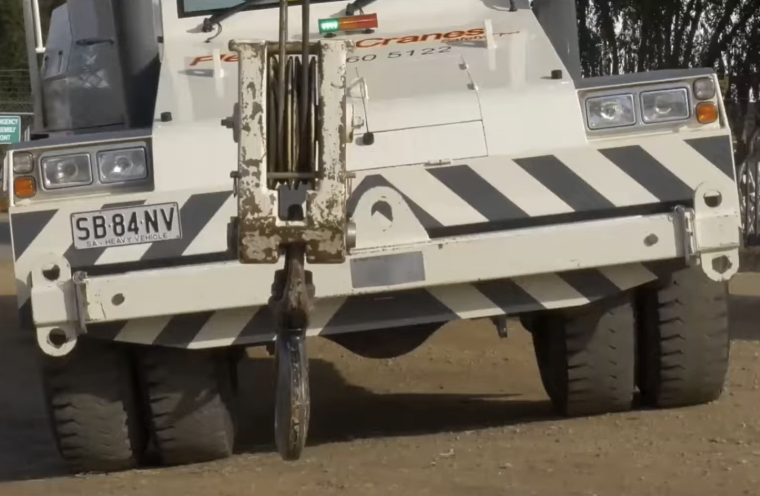
Frannas are articulated pick and carry cranes. They don’t slew. They don’t use outriggers. They sit on tyres and they’re designed to travel with a suspended load.
That’s what makes them so useful. It’s also what makes them unforgiving.
Outrigger cranes can level themselves to stay within tolerance. Frannas can’t. Any slope, rut or crossfall immediately affects stability. And because these machines are designed to move, encountering uneven ground is a given.
This is the sensitivity sits at the centre of both their productivity and their risk profile.
Where the older machines fell over (literally)
Mobile cranes are designed to operate on firm, flat, level ground – within a 1% gradient, according to AS 1418.5. Any deviation from this requires that the capacity be reduced (de-rated) accordingly.
Outrigger cranes can mechanically correct for that. Frannas are at the mercy of dirt and physics.
Here’s the truth safety leaders need to understand: Older Frannas relied on an LMI (Load Moment Indicator or ‘crane computer’) that assumed the machine was level. When it wasn’t, the operator was expected to manually de-rate the crane using diagrams and complicated calculations from the operator’s manual.
Take a AT-20 (20t Franna) circa 2012 for example. The process required the operator to assess the slope, calculate the reduction, remember it, and then mentally override what the computer was telling them for the duration of the lift.
Meanwhile, the LMI could still be indicating up to 60 percent more capacity than what was actually safe.
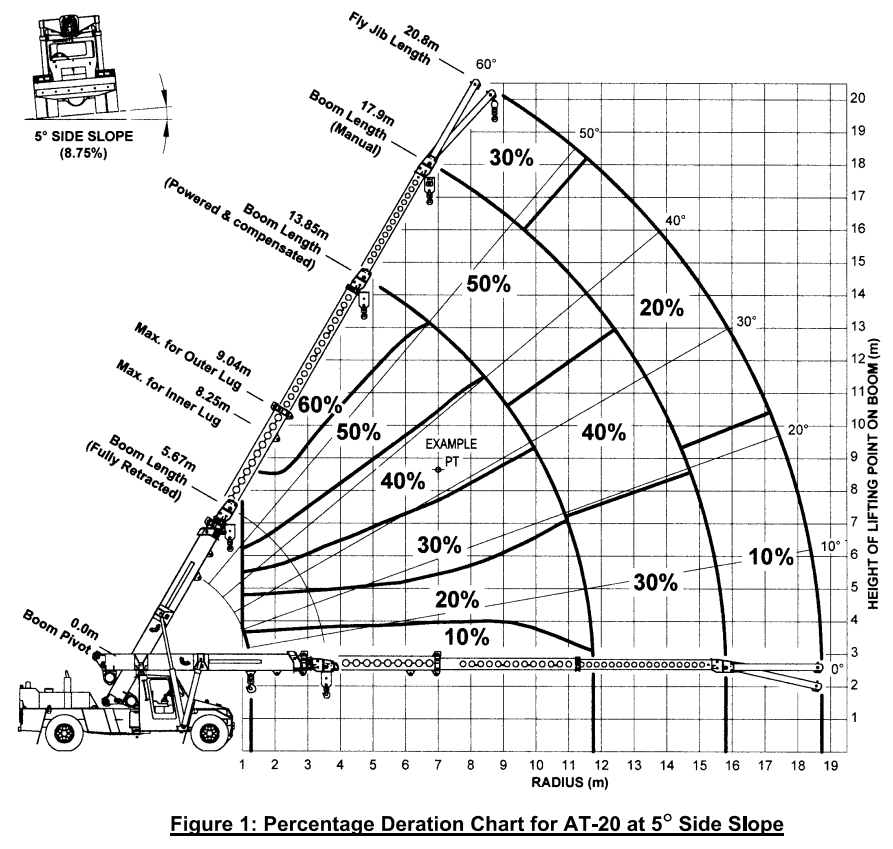
Sounds ridiculous, doesn’t it. But that was the reality on site for years.
A system that asked a human to compensate for a blind computer while travelling with load. And it failed exactly as you’d expect it to.
All-hail the DLMI
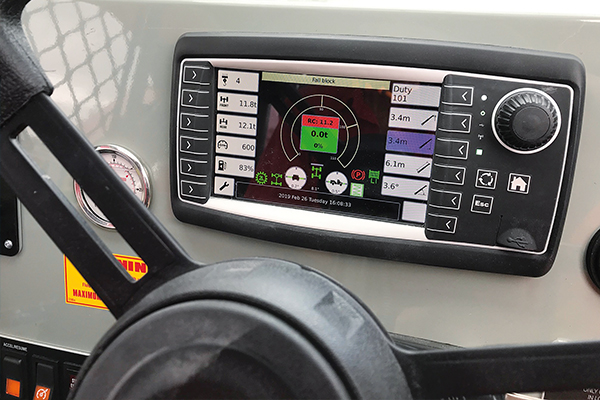
In 2013, Terex released the Dynamic Load Moment Indicator, although it took until the release of the MAC25-4 (circa 2018) in which the computer was standard, for it to become prevalent in the market.
Nevertheless, this was a major upgrade, that changed how the machine understood itself.
The DLMI actively measures pitch and roll in real time and adjusts capacity continuously based on what the crane is actually doing, not what it assumes it’s doing.
No more mental de-rating.
No second-guessing the computer.
The capacity shown is the capacity available. That’s it.
Also available for retrofitting to older machines, this single change removed one of the biggest contributors to historical Franna rollovers.
Safety Radar pushed it further again
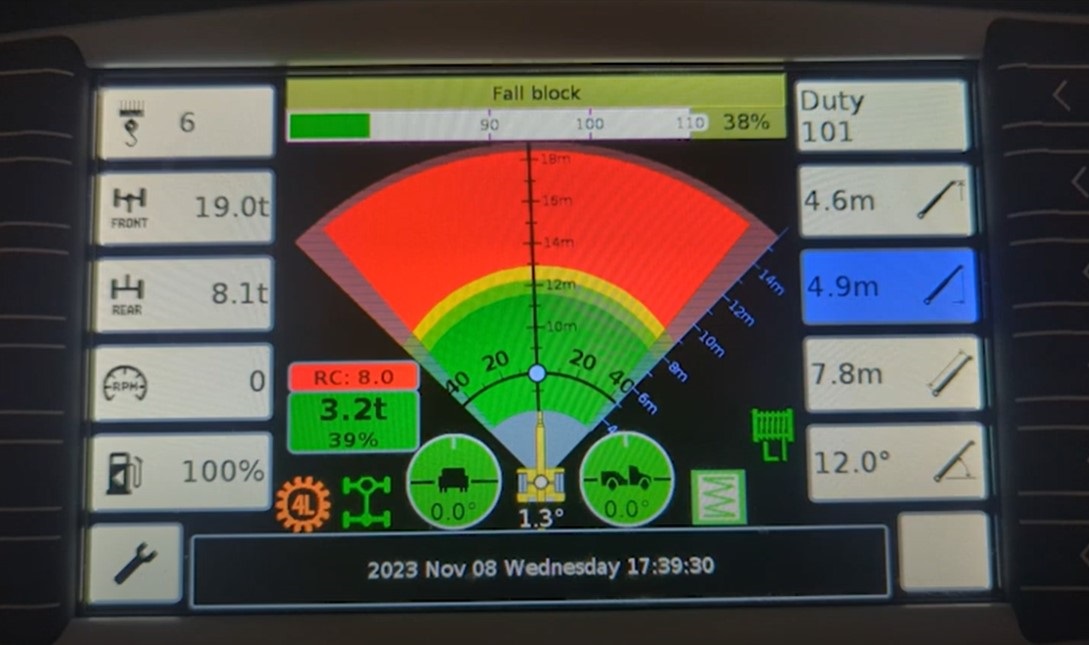
In late 2022, Franna released another step up in operational safety – the Safety Radar.
The DLMI upgrade was great as it tells the operator the exact capacity of the crane based on the current situation at that point in time. But combining it with the Safety Radar goes further than the current point in time. It helps the operator see into the future (literally).
The safety radar dynamically maps the crane’s safe working area based on boom position, articulation, pitch and roll, slope and load radius. It displays a visual radar-style map showing where the safe zones are and, critically, where they aren’t — even before the operator makes a move.
Instead of guessing how a turn, slope or extension will affect stability, the operator sees it. The display updates as conditions change while moving from point A to point B, providing predictive insight into the next safest move, not just a snapshot of the current one.
But we still see Franna’s on their side?
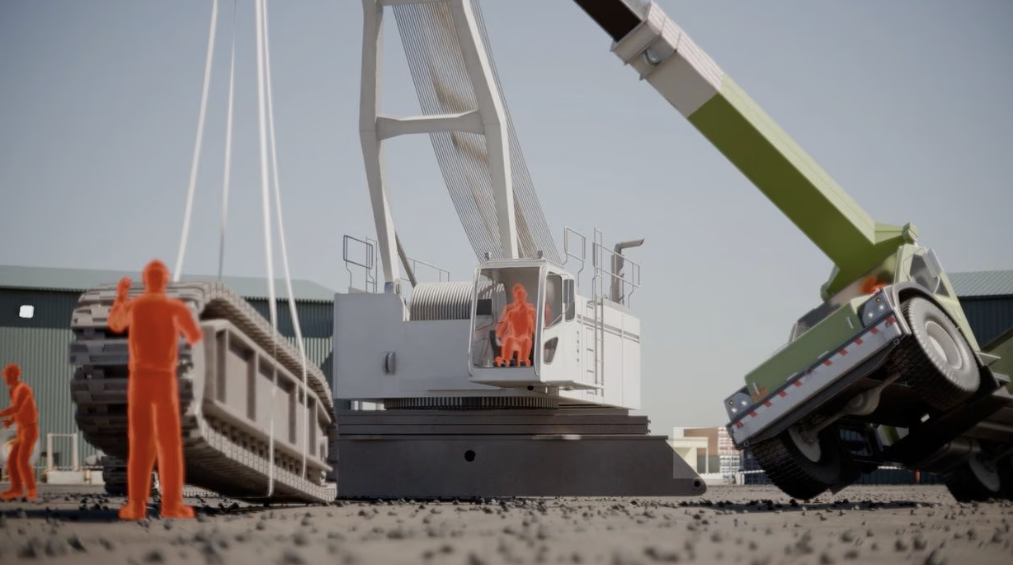
That is true. We also see outrigger cranes on their side, crawler cranes on their side, piling rigs on their side, telehandlers on their sideand even tower cranes somewhat ‘on their side’.
By pointing this out I do not mean to connote that ‘sh*t happens’. I make the case that cranes are high risk plant, and we must control the risks involved as far as is reasonably practicable. Franna’s, given their mobility, inherently pose risks that the above-mentioned types of cranes do not.
The question worth asking is whether modern Frannas, fitted with current systems and operated within a proper framework, are objectively more dangerous than the alternatives now being used in their place.
In many cases, they aren’t.
What actually reduces risk on site
Technology helps, and is higher up the hierarchy, but there is more you can do from an administrative perspective to layer controls.
In my role as lift engineer on a major tier-one project, we also monitored behaviour.
Each month, I downloaded operational data from every Franna on site. Every movement. Every utilisation spike. Every time the machine was pushed.
At the start, we were seeing utilisation exceeding 120 percent. Over time, that dropped well below the 90 percent site limit. A hard limit that applied even with a lift study.
Nothing about the crane changed. The way it was used did.
In 2024, Monadelphous took that further by installing in-vehicle monitoring systems that alert when a Franna is overloaded. Not flashy. But it proved bloody effective.
Actually following what is written in the manual never goes astray either. The manual from cranes exhibiting the DLMI reads, "In order to determine the slide slope of a particular site the crane’s LMI can be used to give an approximation. Before commencing the lift, drive the un-laden crane slowly across the sloping surface and note the maximum slope displayed."
Educating operators, as well as supervisors and enforcing this requirement further reduces the unknown.
Training, tickets and the gap in between
I’m not interested in blaming operators. They’re the last link in the chain, and I can't speak from personal experience here.
But of course every rollover does has someone in the seat and we can’t ignore the factors of time in the seat, pressure, environment, fatigue and of course training that combine when it comes to a split second decision.
What I can say is that there sits a large onus on crane owners to ensure the competency of the person in the seat - and to back that person in their decision-making. Where dry-hire and labour-hire intersect, this can get messy. An on-site tick-and-flick verification by someone who’s never operated a crane is about as useful as a pocket in a singlet.
If you're going to have a verification of competency process (which you should), focusing in on that specific Franna, not just all cranes covered by the HRWL, is something that needs zooming in on.
Where this leaves the conversation
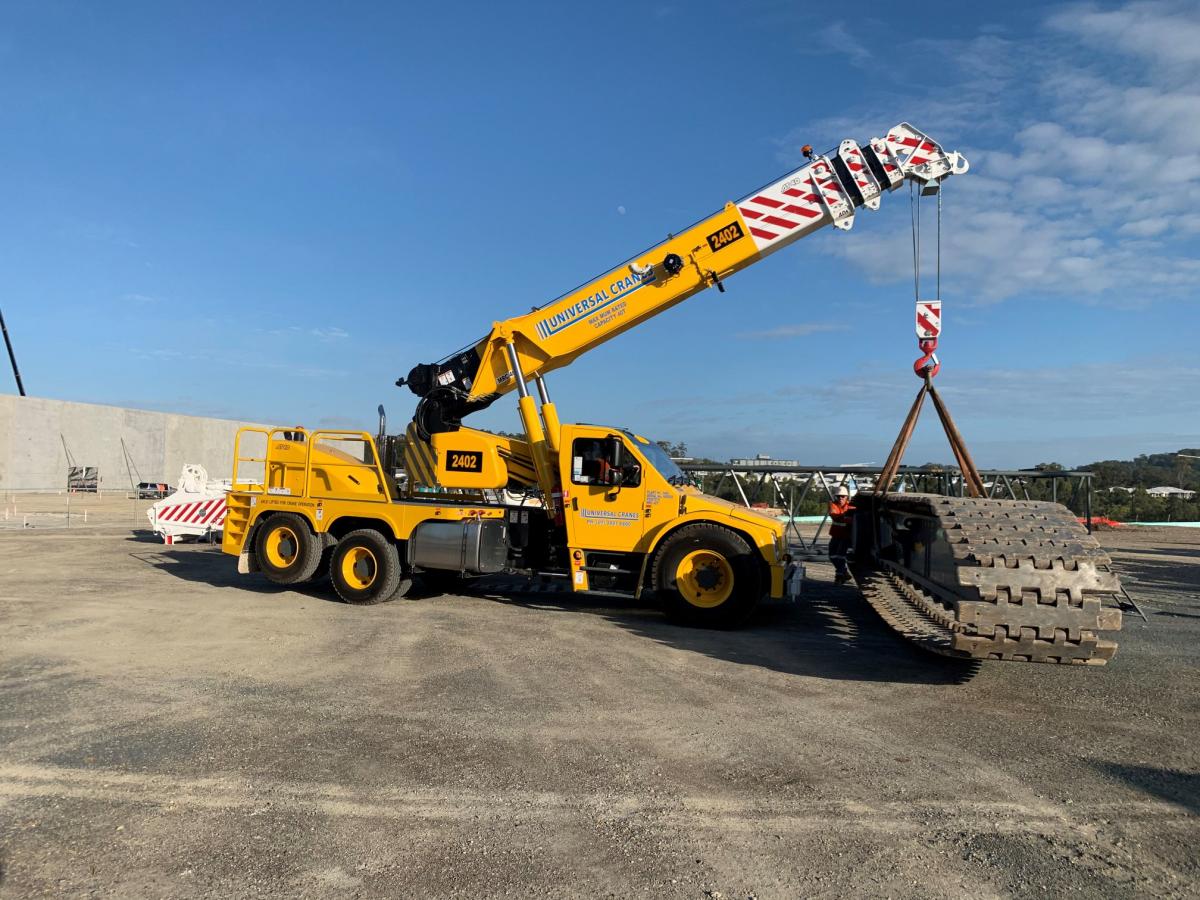
If your organisations safe systems of work did not cater for Franna’s nuances and banning them was the only option, that somewhat is understandable.
But the controls are now there. So it's a worthy question to ask, what’s your excuse for not revisiting the decision?
The harder question is whether decisions made years ago still reflect today’s risk profile, or whether they’ve quietly locked sites into less controlled alternatives that you’re comfortable owning.
It’s not an easy conversation to have.
But avoiding it leaves you just as exposed as the day you first allowed Franna’s on site.
Follow the Crane Class Newsletter
Become part of the Crane Class Community and receive technical crane knowledge direct to your inbox.
Author